There are places you plan for months and places that simply call you one quiet evening while you are scrolling through old photographs of someone else’s journey. Sarnath happened to me the second way. A monk’s maroon robe in a stranger’s Instagram post, a half-caught mention of a stupa older than most nations, and I was already checking train fares to Varanasi before my coffee went cold.
I did not book a five-star stay or a guided package. I picked a modest homestay near Ashapur, packed a notebook instead of a checklist, and told myself I would let the town’s residents become my real itinerary. Something about chasing silence in a place built on the Buddha’s first sermon felt like the only honest way to arrive.
Sarnath sits barely ten kilometers northeast of Varanasi, in the Gangetic plains of Uttar Pradesh, cradled by the Varuna River’s gentle bend. This is where Siddhartha Gautama, after getting enlightened, walked and delivered his first sermons to five ascetics in a deer park, turning the wheel of dharma and quietly starting one of history’s great spiritual movements.
Centuries rolled through this soil like monsoon clouds. Ashoka raised his famous lion pillar here in the third century BCE, monasteries multiplied under Kushan and Gupta patronage, and Chinese pilgrim Xuanzang once wandered these same lanes describing thriving sanghas. Invasions later reduced much to rubble, yet excavation slowly resurrected what devotion had buried under centuries of dust.
Just this week, while I was still arranging my thoughts about the trip, Sarnath was inscribed as a UNESCO World Heritage Site, becoming India’s forty-fifth such property, announced at the 48th World Heritage Committee session in Busan. Locals I met were beaming, calling it overdue recognition for a site sacred to millions of Buddhists worldwide.
Climate here behaves like a strict schoolteacher, generous only in short bursts. Summers turn punishing between April and June, monsoon drenches the grounds from July onward, and winter, from November to February, wraps mornings in soft fog perfect for unhurried walking. I chose late winter, and the low golden light on ancient brick felt like a gift I hadn’t earned.
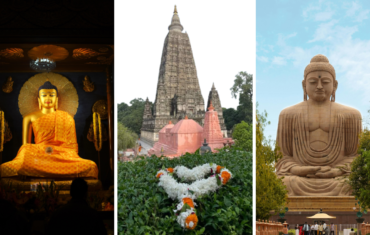
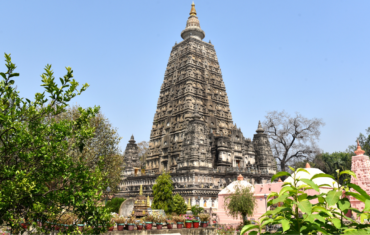
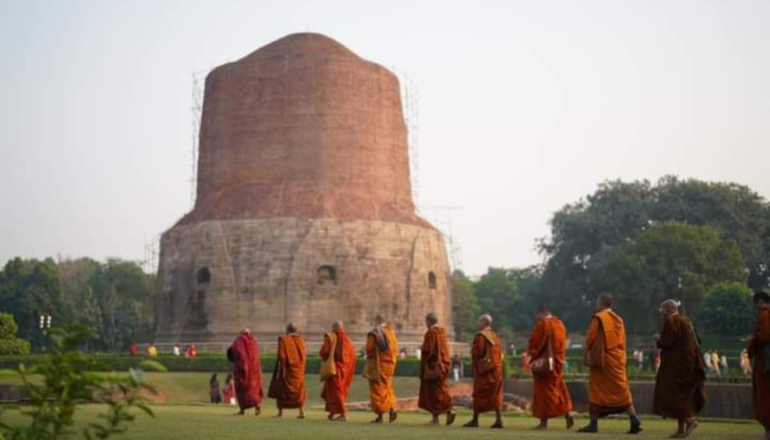
Nothing prepared me for the Dhamek Stupa itself. Thirty-nine meters of solid masonry, geometric bands carved into its lower half, rising from the exact spot tradition holds as the Buddha’s first sermon site. I stood there at dawn watching maroon-robed monks circle it silently, their footsteps the only sound against centuries of accumulated stillness and stone.
Nearby, the Ashoka Pillar lies fragmented but its lion capital, now India’s national emblem, sits preserved in the site museum. Ruins of ancient monasteries spread across manicured lawns, mossy and half-buried, while the archaeological museum houses relics that left me standing motionless, genuinely humbled by craftsmanship achieved without modern tools.
Natural beauty here whispers rather than shouts. Deer still graze near Mrigadava, the original deer park, tamarind and peepal trees shade crumbling stupas and the Mulagandha Kuti Vihara’s garden blooms with lotus ponds mirroring temple spires. Evenings bring flocks of parakeets swirling above ruins, painting the archaeological calm with sudden, joyful chaos.
Culture in Sarnath moves at a pilgrim’s pace, unhurried and deliberate. Thai, Japanese, Tibetan, Sri Lankan and Myanmar-style monasteries dot the town, each reflecting its homeland’s architecture, incense, and chanting rhythm. Locals, largely Hindu and Buddhist, coexist with quiet mutual respect, and I noticed shopkeepers greeting monks with genuine warmth rather than transactional politeness.
Lifestyle here is refreshingly unpretentious. Families run small eateries, artisans sell handwoven Banarasi silk scraps repurposed into prayer flags, and evening aarti crowds from nearby Varanasi rarely spill into Sarnath’s calmer lanes. I spent an afternoon chatting with a tea-stall owner whose grandfather had watched the excavation teams unearth pillars decades earlier.
Food surprised me pleasantly. Try the simple Kachori-Sabzi breakfasts, Banarasi-style chaat carts near the main road, and unmissable thandai if you visit during festive months. Buddhist monastery canteens occasionally serve modest vegetarian thalis to visitors, and the litti-chokha from roadside vendors remained, honestly, the most memorable, humble meal of my entire trip.
Reaching Sarnath is refreshingly straightforward. Varanasi’s Lal Bahadur Shastri International Airport connects major Indian and select international cities, roughly thirty minutes away by road. Varanasi Junction and Varanasi City railway stations serve extensive train networks, while Sarnath itself lies a short, scenic drive from both, making it an easy addition to any Varanasi itinerary.
Local connectivity relies mostly on auto-rickshaws, cycle-rickshaws, and shared e-rickshaws plying between Varanasi and Sarnath frequently throughout the day. I preferred cycle-rickshaws for slower, conversational rides through village lanes, chatting with drivers about cricket, harvests, and their children’s schooling, which taught me more than any guidebook paragraph ever could.
A few honest travel tips from someone who occasionally got it wrong. Carry cash since card acceptance remains patchy near smaller monasteries, negotiate rickshaw fares beforehand, wear modest clothing covering shoulders and knees, and avoid peak summer afternoons entirely. Mosquito repellent helps near the deer park, and comfortable footwear matters more than fashionable footwear. I left Sarnath without any grand epiphany, just a notebook full of half-finished sentences and a strange lightness I hadn’t expected from ancient brick and quiet grass. Some destinations impress you instantly; Sarnath simply stays, unhurried, in the back of your mind, gently insisting you return before you’ve even properly left.